
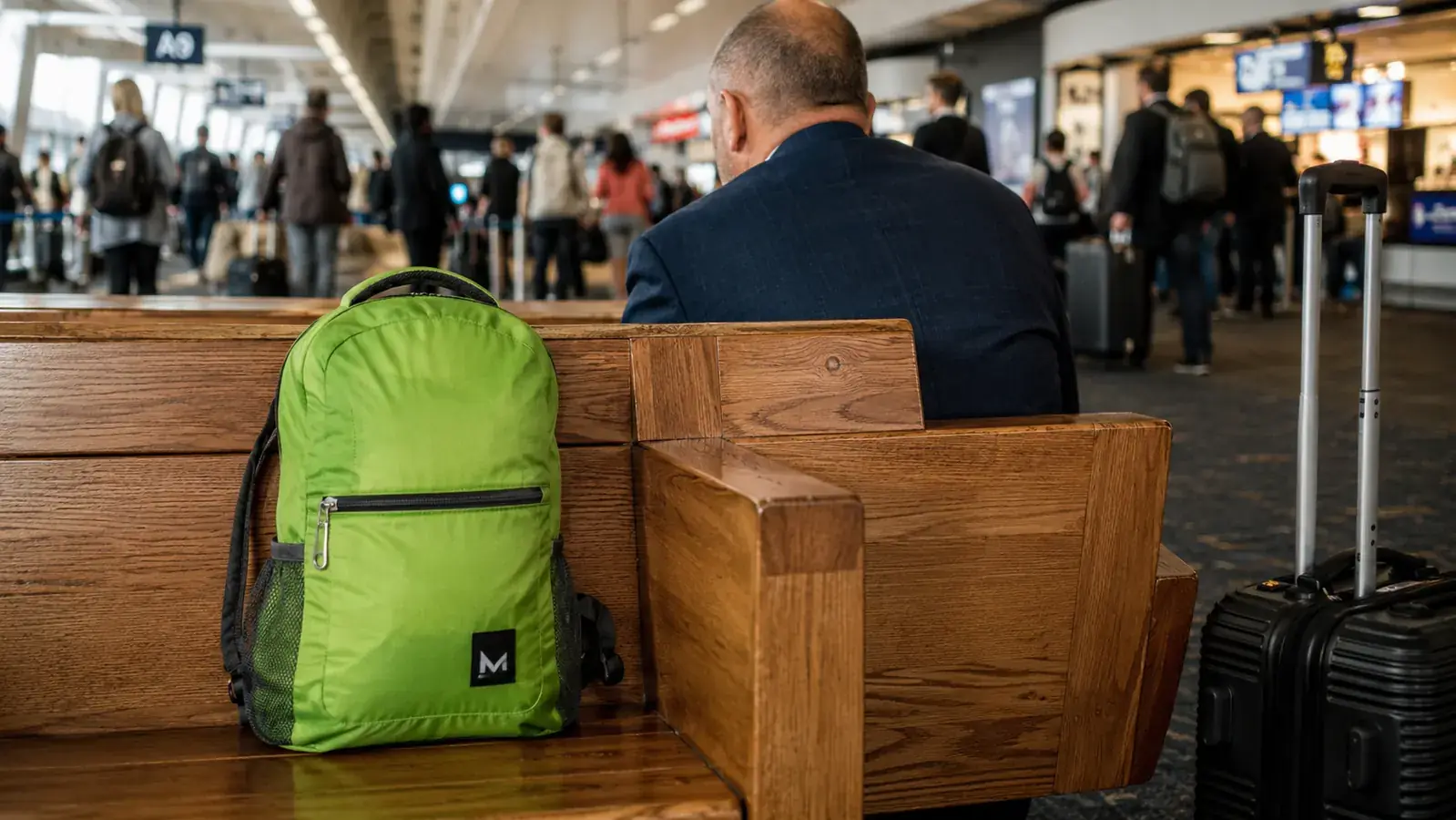
Let me tell you the question I hear most from travelers who are eyeing the ZOMAKE 20L packable daypack on Amazon: is this actually any good, or is it just cheap? There is a difference. Cheap means it costs little and performs accordingly. Good value means it costs little and performs well enough that the tradeoffs feel fair. Those are not the same thing, and the distinction matters a lot when you are trusting a bag to carry your phone, wallet, passport, and a full day of gear through a foreign city.
I want to answer that question directly, because the five-star reviews on Amazon are enthusiastic and numerous but they tend to skip the details that matter most to a real traveler making a real purchasing decision. I have carried the ZOMAKE 20L on over a year of city travel, day trips, and airport runs. I know what it does well. I also know exactly where it lets you down, who should not buy it, and what you are silently agreeing to accept when you click Add to Cart. That is what this review is about.
The Quick Verdict
Genuinely good value for urban travel and carry-on use, but be clear-eyed about the comfort ceiling and near-total lack of organization before you commit.
Amazon Check Today's Price →Still unsure whether a $16 backpack can handle real travel? The 18,000-plus Amazon reviews say it can.
The ZOMAKE 20L packable daypack packs into its own pocket, holds a full day of city gear, and weighs almost nothing inside your carry-on. See whether the current price still makes it an obvious buy.
Amazon Check Today's Price on Amazon →The Buyer's Remorse Questions, Answered First
Most reviews bury the bad news. I am going to start with it, because the buyers who regret this purchase almost always regret it for the same predictable reasons. So let me run through the top four concerns I hear and give you a straight answer on each one.
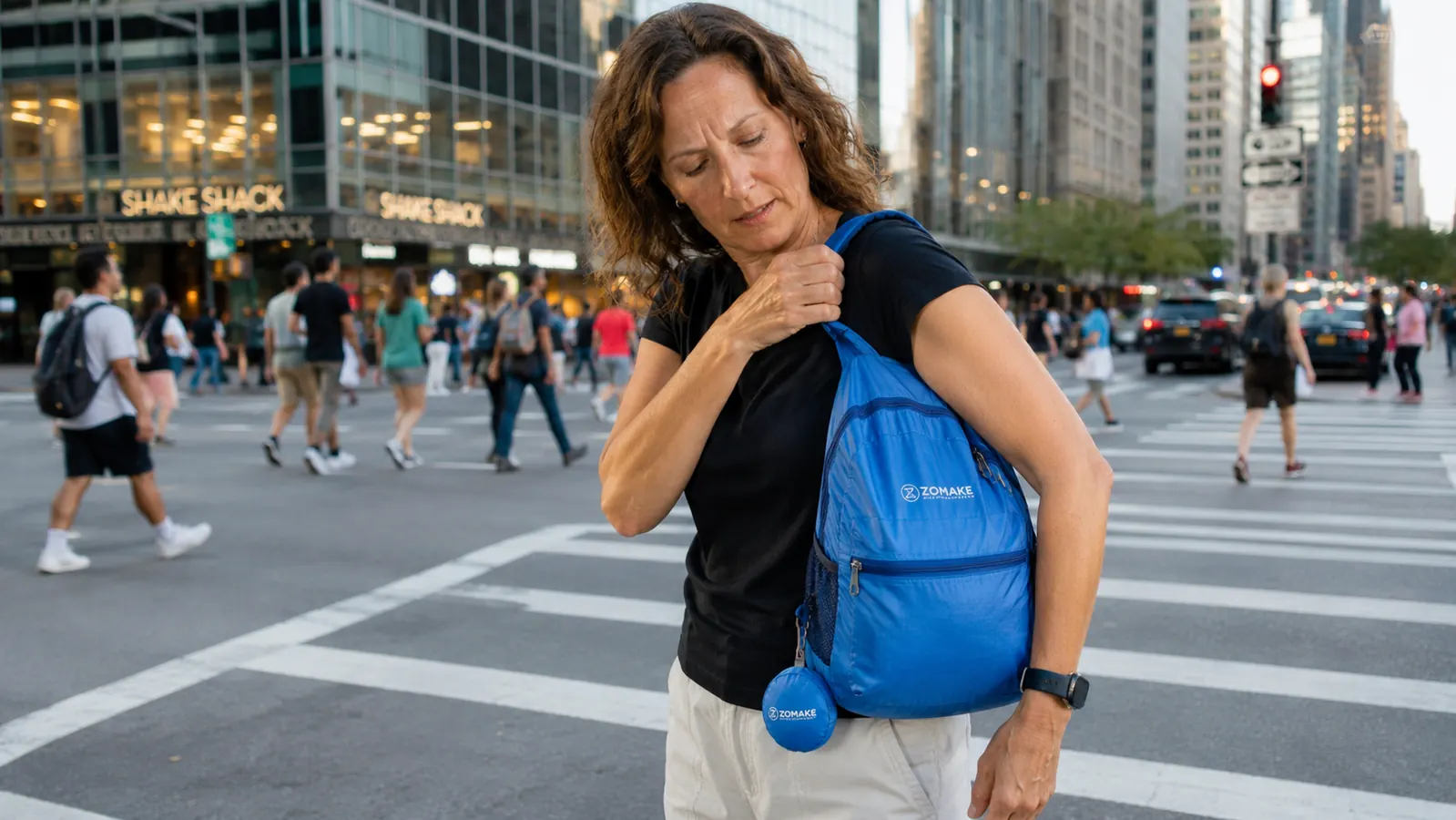
Will the shoulder straps cut into my shoulders? Yes, if you load the bag heavy. The straps are padded, but thinly. Loaded to 10 or 11 pounds for a few hours, most people are fine. Push past 12 to 13 pounds over a full day of walking and the straps start to feel like they belong on a student bookbag from 1998. There is no sternum strap to pull the load inward and no hip belt to transfer any weight off your shoulders. If you have existing shoulder or neck tension, this will amplify it on a heavy day.
Will the zippers fail? Based on over a year of regular use, no. The YKK-style zippers run smoothly and have shown zero signs of wear on the main compartment or the front pocket. Zipper failure is the most common structural complaint on ultra-budget bags and the ZOMAKE has largely avoided it. The pack-down zipper on the small carrying pouch feels slightly lighter-duty than the main ones, but it has held up without incident.
Is the fabric actually water-resistant or is that marketing? It is genuinely water-resistant, not waterproof. In light rain and drizzle the DWR coating does its job and the interior stays dry. Heavy sustained rain for 30-plus minutes is where I would start to worry. For reference, the inner seams are not taped, which is where water eventually finds its way in on any coated nylon bag. Carry a dry bag or a hotel shower cap inside if you have something critical that cannot get wet.
Will it fall apart after three months? This is the fear driving most of the skepticism, and I understand it. The answer is: not if you are using it for travel as intended. City walking, day trips, light hiking, airport runs. The stitching at the strap attachment points, the stress point that kills cheap bags first, is holding up well past the 12-month mark. The fabric has not pilled or frayed. I cannot promise this bag lasts forever, but for under $20, one solid year of travel use is an honest expectation.
What the Five-Star Reviews Leave Out
The thing about a 4.6-star rating with 18,000-plus reviews is that it pulls people in before they ask the right questions. The ratings are earned: this bag genuinely does what it advertises. But the reviewers who are thrilled tend to be people who bought it for weekend trips, hiking trails, or as a grocery bag, and those are not the same demands as 14-hour layovers or full travel days on foreign cobblestones.
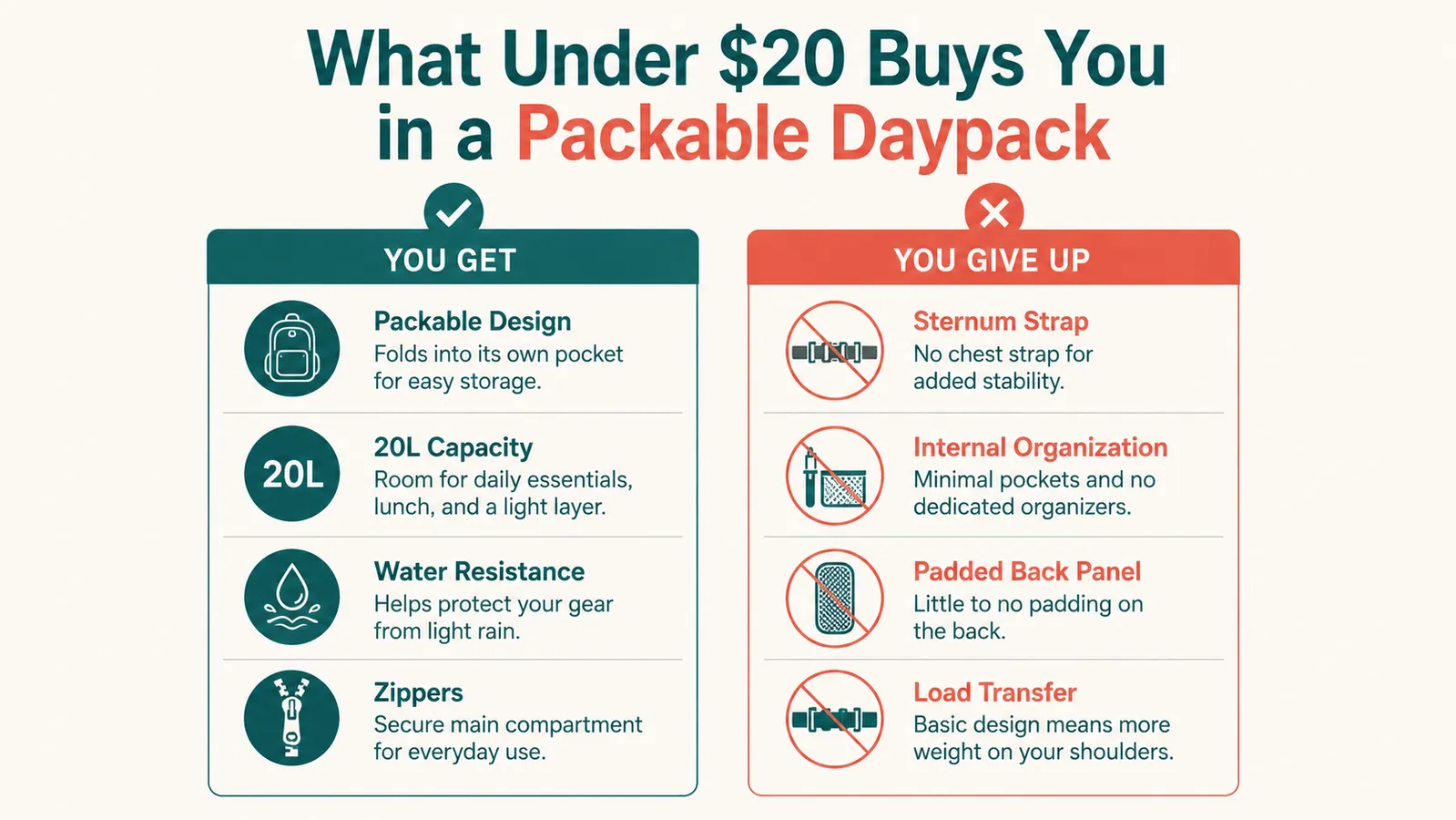
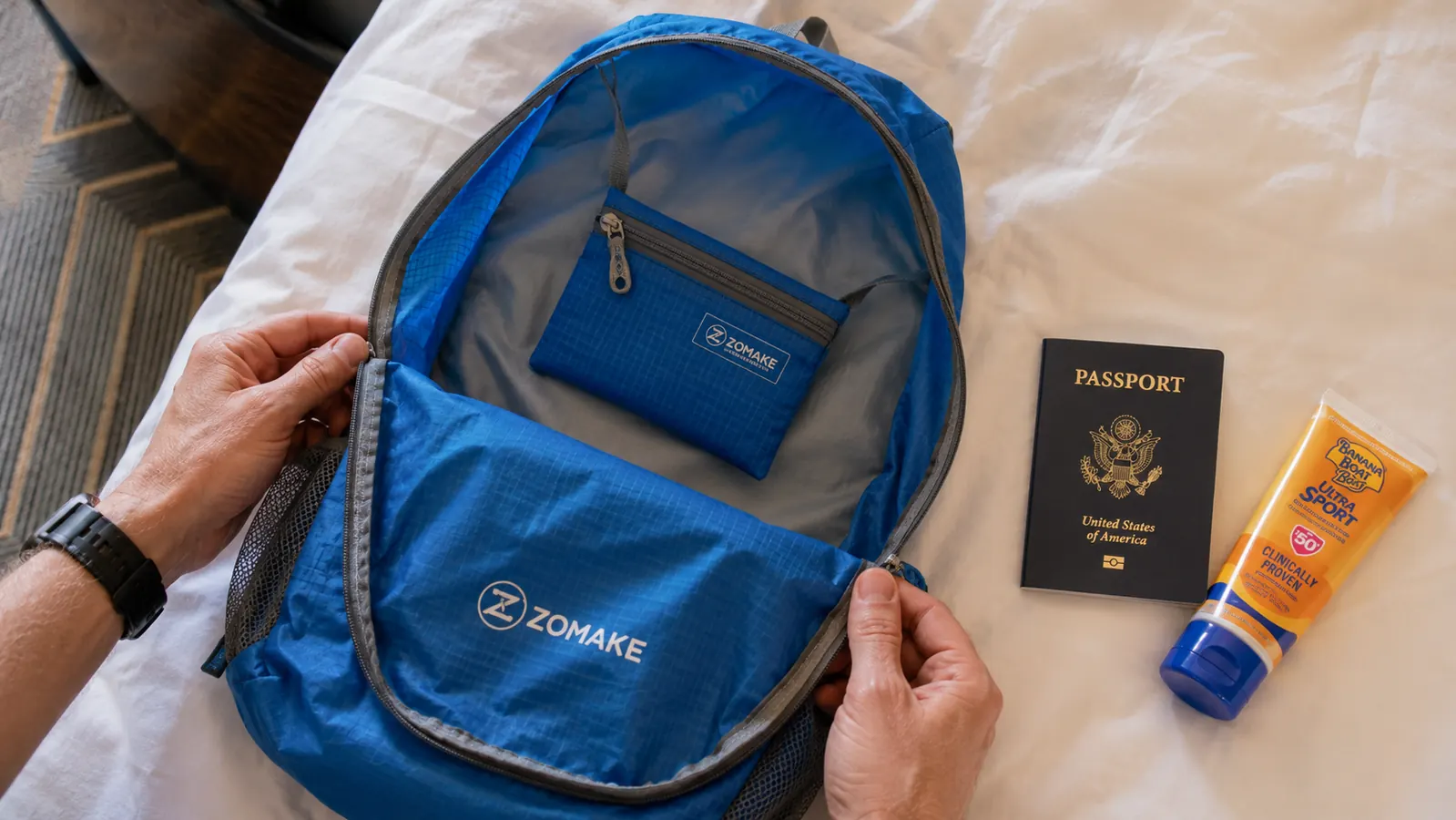
Here is what the glowing reviews rarely mention. There is no internal divider of any kind. The main compartment is one open tube. If you want anything resembling organization inside this bag, you supply it yourself with packing cubes, small pouches, or rubber bands. Travelers who carry a lot of small, frequently-accessed items, think sunscreen, headphones, lip balm, ChapStick, folding fan, charging cable, will find themselves digging constantly. The single front zip pocket helps a little for the most immediate items, but it is narrow and shallow.
The back panel is another omission worth naming. There is a thin foam insert inside the back panel for just enough structure to keep the bag from completely flopping. But there is no airflow channel, no moisture-wicking fabric against your back, and no frame sheet. On a hot city day with a loaded bag, your back will be damp where the bag sits against you within an hour. If back sweat is something you care about, especially in humid destinations, this is a meaningful quality-of-life issue that the product photos do not illustrate.
The other omission: the carry handle at the top of the bag is a single loop of thin webbing. It is fine for lifting the bag off a surface and handing it over a security conveyor. It is not fine for carrying the bag by the handle for more than a minute or two with any real weight inside. It has no padding and cuts into your hand. This is not a dealbreaker, but it is a tell about where costs were cut.
The five-star reviews are not wrong, they are just written by people who were not asking the same questions you are. Know what to look for and this bag becomes a very clear, honest choice.
Where the ZOMAKE Actually Shines
Having said all of that, I want to be fair about where this bag genuinely earns its price. The pack-down size is remarkable for what you get. Folded into its front pocket, the ZOMAKE compresses to roughly the footprint of a hardback novel and maybe an inch thick. At 8.5 ounces, it weighs less than most hardback novels too. That combination, small when stored, genuinely useful when deployed, is the product's core value proposition and it delivers on it without compromise.
The deployment speed matters more than people expect. When you land in a new city and your rolling carry-on is headed to the hotel while you want to go straight to a museum, you need a bag in about 20 seconds. The ZOMAKE unzips, shakes open, and is ready to load in that time. There is no stuff sack to wrestle with, no buckles to thread, no compression straps to loosen. Open, load, go. I have done it in taxi backseats, airport arrivals halls, and train station bathrooms. The speed is genuinely useful.
The fit as a seat-under personal item is also legitimately better on this bag than on any structured alternative. Because the sides are soft and the material compresses, the bag fills the irregular space under an airplane seat rather than fighting it. I have used this on regional jets and tight economy rows on international flights where a structured bag would require partial compression under the seat. The ZOMAKE just squishes. That is a genuine advantage for carry-on-only travelers.
The Durability Reality Check
Budget bags get bought with one quiet fear attached: will this thing survive long enough to matter? So let me walk you through what the ZOMAKE actually looks like after extended use, in terms any skeptic can evaluate.
The bottom panel shows the most wear. Being set down on airport floors, sidewalks, and market stones leaves a faint scuff layer on the fabric, but no wear-through, no thinning, and no holes after more than a year. The thread color at the bottom seam has dulled slightly from friction, which is cosmetic. The seams themselves are intact.
The most structurally vulnerable point on any daypack is where the shoulder straps attach to the bag body. Those stitching points take the full weight of everything inside the bag with each step and each shift of your weight. On the ZOMAKE, after over a year of regular loading and unloading, those attachment points look functionally identical to how they looked out of the box. No thread fraying, no webbing stretching, no early signs of delamination. That is not a small thing for a bag at this price. It suggests the manufacturer understood where cheap bags typically fail and reinforced accordingly.
The one visible degradation point worth tracking: the DWR water-resistant coating does diminish over time. After several months of regular use, water still beads on the surface but less dramatically than when new. A pass with a hair dryer or a spray of DWR restorer will refresh it. If you are buying this for genuinely wet environments, plan on treating the fabric every six months or so. It takes about 10 minutes and costs almost nothing.
How It Compares to Paying More
The comparison travelers make most often is between the ZOMAKE and something like the Osprey Daylite, which costs several times more and brings a proper back panel with an airflow channel, a sternum strap, load-stabilizer straps, and Osprey's build quality. If you are hiking actual trails with 15-plus pounds, or if you travel often enough that back comfort and pack fit become productivity and health issues, the Osprey is a legitimate upgrade. No argument.
The honest question is whether you need those upgrades for how you actually travel. For someone who uses a day bag on two or three travel days per trip, carries 8 to 10 pounds of typical city gear, and wants a bag that disappears into their carry-on between uses, the ZOMAKE is not an inferior Osprey. It is a different product solving a different problem at a different price. The full side-by-side breakdown in the ZOMAKE vs Osprey Daylite comparison covers those tradeoffs in precise detail if you want to think through exactly where the premium goes.
The Organization Problem and How to Fix It
The interior organization gap is the most consistent real-world complaint from experienced travelers who buy this bag. One big open compartment plus one narrow front pocket is not enough structure for a full travel day of mixed small items. The good news is that this is a fully solvable problem, and the fix costs almost nothing.
What I do: a small zippered travel pouch inside the main compartment holds cables, a portable charger, and any loose tech. A flat toiletry bag holds sunscreen, lip balm, and any liquids. Everything else goes loose in the main compartment, which by that point has enough breathing room to actually find things quickly. Two pouches, zero digging, problem solved. If you are already traveling with packing cubes for your carry-on, the smallest cube in your set slots into the ZOMAKE's main compartment cleanly and gives you exactly the internal structure the bag is missing. More detail on that system, including how to use a packable daypack as part of a complete carry-on travel setup, is in the guide on traveling with just a carry-on using a packable daypack.
What We Liked
- Packs to hardback-novel size in under 15 seconds, genuinely ultralight at 8.5 oz
- Zippers remain smooth and reliable after more than a year of regular use
- Soft sides compress under airplane seats far better than any structured alternative
- Strap attachment stitching has shown no early-failure signs despite regular loading
- DWR coating handles real-world rain and drizzle without soaking through
- Price point makes it low-stakes to use hard and replace eventually
Where It Falls Short
- Shoulder straps become genuinely uncomfortable above 12 to 13 pounds over a full day
- No sternum strap, no hip belt, no load transfer of any kind
- Zero internal organization: one open tube plus one narrow front pocket
- Back panel has no airflow channel, back sweat is a real issue in warm climates
- Top carry handle is unpadded webbing that cuts into your hand under any real weight
- DWR coating does degrade with use and needs periodic refreshing

Who This Is For
The ZOMAKE 20L honest review version of who this is for is slightly narrower than the marketing suggests. This bag is best for carry-on-only travelers who need a packable day bag that stores nearly flat, deploys fast, and carries a reasonable city load without turning into a physical problem. It is a strong pick for anyone who travels enough that they have already worked out their own gear organization system and can plug this bag into it. It also works well as a secondary bag for cruise ship shore excursions, rail travel in Europe, and any trip where you base yourself in one place and day-trip outward. For those use cases, it competes with bags costing three to four times more and holds its own.
Who Should Skip It
Skip the ZOMAKE if you regularly load a day bag past the 12-pound mark and spend more than four to five hours on your feet. Your shoulders will tell you at hour three that you made the wrong call. Skip it if you carry a lot of small items that need their own dedicated pockets, and you genuinely hate the friction of digging through an unorganized bag mid-street. Skip it if you are heading somewhere reliably wet, where repeated soaking and drying cycles will wear out the DWR finish faster than retreatment can keep up. And skip it if back ventilation matters to you, because this bag will trap heat against your back in any temperature above mild. For any of those situations, paying more for a bag that addresses those specific needs is worth it. The 10 reasons a packable daypack belongs in every carry-on lays out the full use-case logic if you want a different framing of the decision.
Under $20, 18,000-plus ratings, a year of real-world use with no structural failures. The honest answer is: it holds up.
If you travel carry-on only and just need a light day bag that packs flat and does not take up space, the ZOMAKE 20L is a genuinely fair deal at its current price. Check what it costs right now before your next trip.
Amazon Check Today's Price on Amazon →